
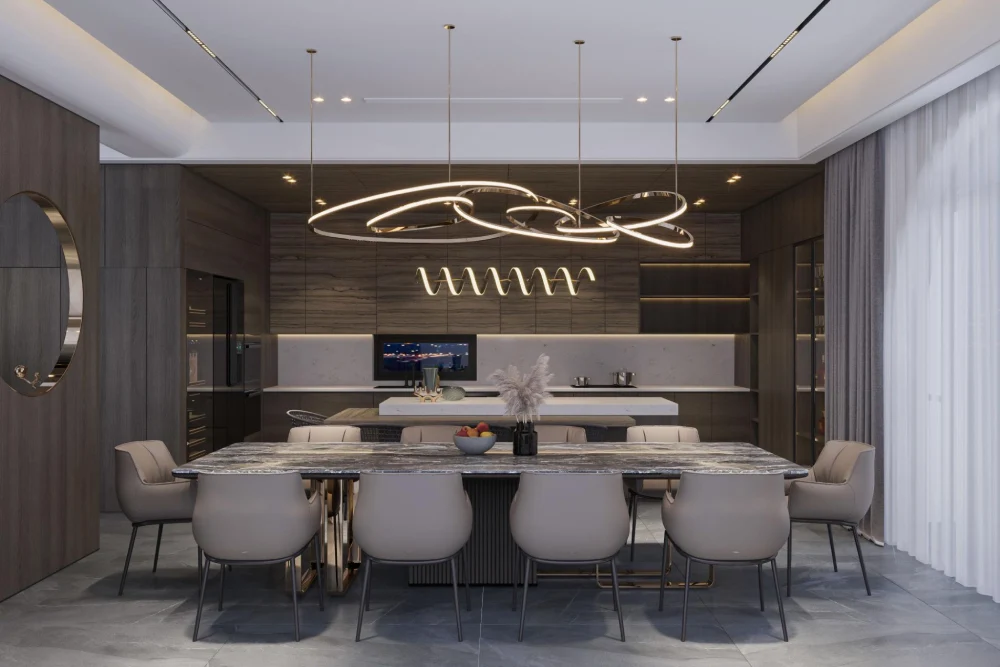
Part one of this series examined how decorative lighting transforms a dining room from a purely functional area into an inviting space for entertaining, extended meals, and conversation. This second instalment explores how to select and position pendants and chandeliers, and how to integrate them with other light sources to create a cohesive environment.
Achieving the Right Scale and Proportion
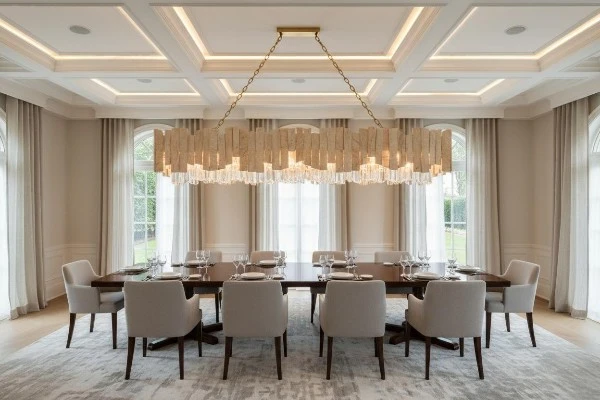
The right scale creates balance. Decorative fittings that are too small can appear disconnected, while appropriately proportioned fixtures establish a stronger focal point.
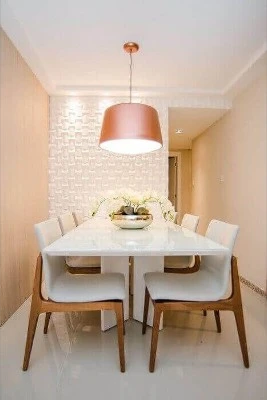
Selecting an appropriate pendant or chandelier involves more than aesthetic considerations. The fixture’s size must correspond to the room’s dimensions, ceiling height, and, in particular, the dining table beneath it.
A handy formula used by lighting designers: add the room’s length and width in metres, then multiply by 8.3. The result gives you a rough fitting diameter in centimetres.
So for a dining room that’s 3.7 metres by 4.3 metres, you’d add those together to get 8.0 metres, then multiply by 8.3 — coming out at roughly 66 centimetres. That points to a pendant or chandelier between 65 and 70 centimetres in diameter, which sits well in the space.
If you’re torn between two sizes, go with the larger one. A fitting that’s too small ends up looking lost in the room, while one that’s properly sized — or even slightly generous — makes a confident statement and anchors the space.
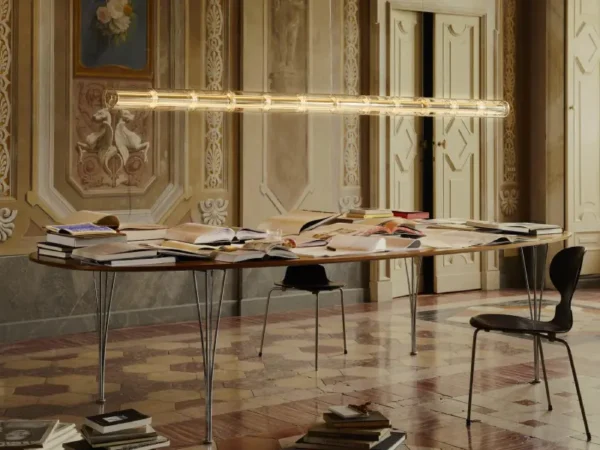
Determining the Correct Hanging Height
Even a stunning chandelier can look wrong if it’s hung at the wrong height. Getting this right matter for both how the room looks and how well the light actually works.
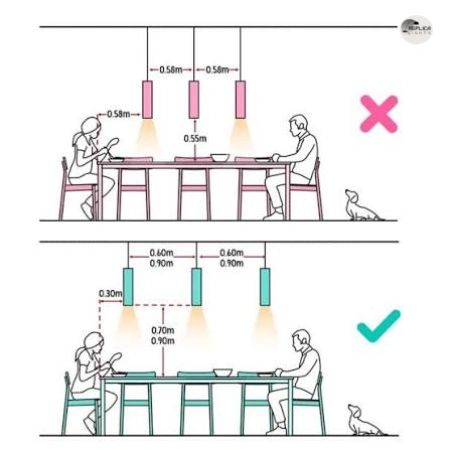
The bottom of your pendant or chandelier should generally sit around 700mm to 900mm above the table surface. At this height, the light reaches the table properly without blocking the view across it when people are seated.
In rooms with ceilings taller than the standard 2.4 metres, you’ll need to adjust accordingly — raise the fitting by around 75mm for every extra 300mm of ceiling height.
That said, these are starting points rather than hard rules. Open-plan spaces, cathedral ceilings, large tables, and unusual room shapes may all require a different approach to strike the right balance.
Layering Light for a More Sophisticated Interior
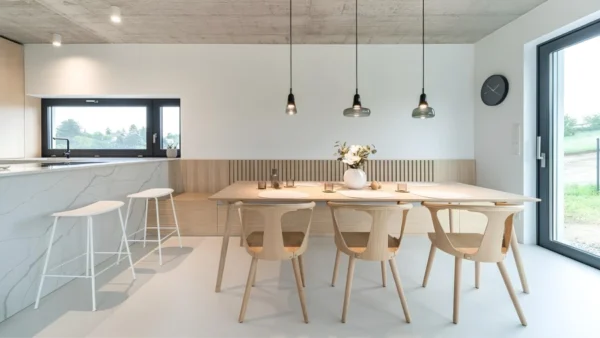
Good dining room lighting isn’t just one fitting doing all the work. The pendant or chandelier is the centrepiece, but it works best as part of a broader scheme.
A room lit only by downlights tends to feel flat and a bit clinical. On the other hand, relying entirely on a decorative chandelier can leave corners dark and make the room harder to use for different purposes.
The best results come from combining several sources:
* Decorative lighting through pendants or chandeliers
* Ambient lighting from recessed downlights
* Accent lighting to pick out decorative details
* Wall lighting where it makes sense
* Natural light during the day
When these are planned together, the dining room becomes somewhere that works well morning through evening, and feels genuinely comfortable rather than just adequately lit.
Using Accent Lighting to Enhance the Dining Experience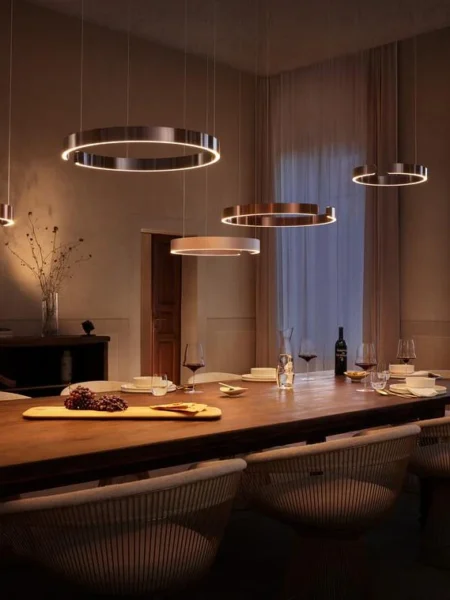
Targeted lighting can quietly do a lot to make a dining table feel more considered and inviting.
A small accent fitting placed between pendants, for instance, can bring out a floral arrangement, a centrepiece, or a decorative object on the table. It adds depth and gives the eye something to settle on.
A pair of adjustable downlights on either side of the main fitting can also cast a gentle cross-light across the table surface, picking up the shine on glassware, cutlery, and polished finishes in a way that makes the whole setting feel more special.
In more traditional rooms, accent lighting positioned near a crystal chandelier can draw out its sparkle in a way that a single overhead source simply can’t match.
Avoiding Glare and Unflattering Shadows
Where you point your downlights matters just as much as where you put them.
Aiming them straight down over the ends of the table is a common mistake. It can throw unflattering shadows across people’s faces and cause glare — especially off reflective surfaces like glass tabletops, polished stone, lacquered finishes, or high-gloss timber.
A better approach is to angle them slightly inward, so the light hits the table first before it reaches the people sitting around it. Keeping the beam angle under 45 degrees from vertical softens the light considerably and is far more flattering for everyone at the table.
It also cuts down on direct glare, making the whole experience of sitting at the table more comfortable. And if you’re using the table for a buffet, adjustable fittings can be redirected toward the walls to spread the light more broadly around the room.
 Structural Considerations for Larger Chandeliers
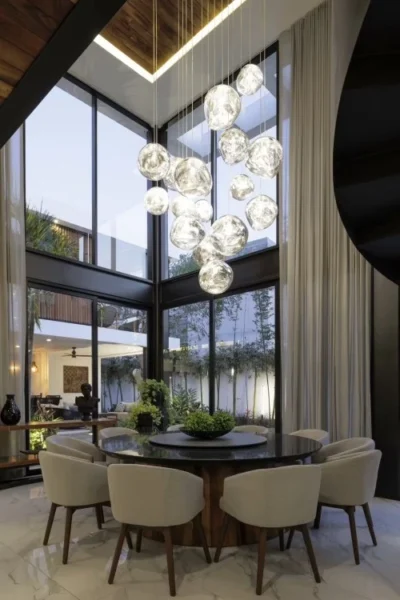
The bigger the chandelier, the more important it is to think about what’s holding it up.
Most standard ceiling canopies are rated to around 20kg, but large statement chandeliers — particularly multi-tier crystal fittings or custom pieces — can easily go beyond that. Before anything goes up on the ceiling, check the weight with the manufacturer and make sure your electrician uses appropriate fixings and, where needed, additional structural support in the ceiling itself.
It’s not something to leave to chance. Getting it wrong creates a safety issue and can cause problems down the line.
Maintenance Solutions for High Ceilings
A chandelier installed in a double-height void or a room with a very high ceiling can be genuinely awkward to maintain. Cleaning it, replacing lamps, or carrying out any servicing becomes a much bigger job when you need scaffolding or a tall ladder just to reach it.
One solution worth knowing about is a chandelier lift — a motorised or pulley-based mechanism hidden above the ceiling that lowers the fitting to a workable height when needed. It adds cost upfront, but over time, it can make maintenance far more straightforward and help keep the fixture looking its best.
Bring it together
Getting dining room lighting right takes more than finding a pendant you like the look of. It comes down to scale, proportion, hanging height, and how the decorative fitting works with everything else in the room.
Put those pieces together — a well-chosen chandelier, thoughtful downlighting, and a few well-placed accents — and you end up with a dining room that genuinely serves the space, whether that’s a dinner party, a family meal, or anything in between. In the end, the right lighting brings the room together and makes it work as both a practical and inviting space.